Vice Admiral Puneet Kumar Bahl, AVSM, VSM (Retd)
SHIPPING AND PORT LEAD DEVELOPMENT
The maritime sector is seeing considerable development as a result of concurrently running initiatives and programmes of the Government. Indian merchant fleet, which grew from 1,213 ships in 2014 to 1,526 in 2023, ranks 18th in the world but it represents only 1.3% of global capacity[1]. Likewise, though India was 20th in global shipbuilding capacity, its market share is less than 1% compared to 90% share with China, South Korea & Japan. India aims to enter the top ten in shipbuilding by 2030 and top five by 2047.[2] These are not easy targets by any yardstick, but it needs to be understood that global trade is projected to grow from $32 trillion currently to high double figures by 2050, highlighting huge potential in the maritime sector.
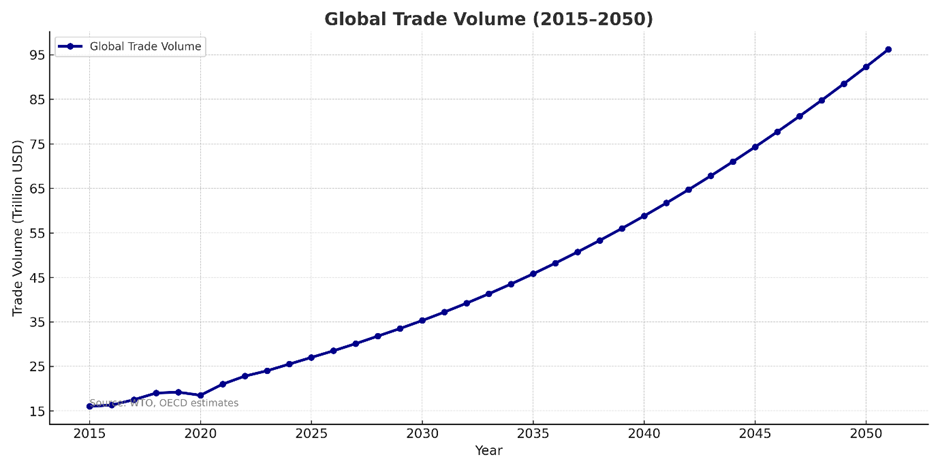
Figure 1: Global trade volume from 2015 to 2050
Note: Generated from projections based on WTO and OECD estimates. The chart clearly shows a steady and significant increase—from approximately $16 trillion in 2015 to over $96 trillion by 2050).
India paid $75 billion in sea freight to foreign firms in 2023[3], underscoring the need to grow the national fleet to avoid disruptions in trade and to retain precious capital in India. Further, the focus is clearly on reducing logistics costs for EXIM & domestic trade by ₹35000-40000 crore annually. The MIV roadmap is estimated to help unlock over ₹20,000[4] crores worth of potential annual revenue for Indian ports
As per estimates, Indian maritime sector would need an investment of ₹85 lakh ($1 trillion) crores by 2047 and ₹5 lakh crore by 2030 to harness its full potential[5]. Under Sagarmala Programme, India has identified 839 projects with an estimated investment of approximately ₹5.8 lakh crore. As of Apr 2025, 272 projects have been completed[6]. It is relevant to note that almost 50% of the total Sagarmala budget has been allocated for port modernization and new port development On 24 Sep 2025, the Union Cabinet approved a comprehensive package of Rs.69,725 crore to revitalize India’s shipbuilding and maritime ecosystem. This looks at a four-pillar approach to strengthen domestic capacity, improve long-term financing, promote greenfield and brownfield shipyard development, enhance technical capabilities cum skilling, and implement legal, taxation, and policy reforms to create a robust maritime infrastructure[7].
Development of New Ports. Six new mega ports will be developed in the country. These include Vadhavan (Maharashtra, notified as the 13th major port), Enayam (Tamil Nadu), Sagar Island (West Bengal), Paradip Outer Harbour (Odisha), Sirkazhi (Tamil Nadu), and Belekeri (Karnataka)[8]. Galathea Bay in Great Nicobar Island (notified as the14th major port) is being developed as a major transshipment hub. It will enhance Indian cargo transshipments by Indian ports from the existing 25% (2020) to 75% by 2030[9].
India’s current port handling capacity is also planned to be increased by more than 300% to 10000 Metric Tons Per Annum (MTPA) by 2047- signifying an unprecedented growth[10]. Over the last decade, major ports increased their annual cargo-handling capacity by an impressive growth of 87%[11]. India is seeking to upgrade Paradip, Vizag & Ennore major ports to 300 MTPA cargo handling capacity by 2030[12]. Concurrently, India’s inland waterways cargo handling capacity is also planned to be increased by almost four times to 500 MTPA by 2047[13]. India is proactively seeking to attract FDI in the maritime sector. During Global Maritime India Summit (GMIS), 2023, Finance Minister Mrs Sitharaman stated that “India’s efforts over the past nine years have transformed the maritime sector, with a remarkable 4.2 BUSD in FDI, driving progress in this vital industry”. Growth in the maritime sector will also boost job creation to the tune of 1 crore jobs, including 40 Lakh direct & 60 lakh indirect jobs[14].
Maritime Development Fund(MDF)[1]. To provide a fillip to the shipping industry, the Indian government has approved the establishment of a ₹25,000 cr ($2.9 billion) MDF in the FY 2025-26 budget. This includes a Maritime Investment Fund of Rs.20,000 crore and an Interest Incentivisation Fund of Rs.5,000 crore to reduce the effective cost of debt and improve project bankability. This fund aims to provide long-term financing for shipbuilding and repair, with the government contributing 49% and the remainder will be contributed by major port authorities, other government entities, Central PSEs, Financial Institutions as well as private sector. Furthermore, on 24 Sep 2025, the Union Cabinet approved the Shipbuilding Development Scheme (SbDS), with a budgetary outlay of Rs.19,989 crore, which seeks to expand domestic shipbuilding capacity to 4.5 million Gross Tonnage annually, support mega shipbuilding clusters, infrastructure expansion, establish the India Ship Technology Centre under the Indian Maritime University, and provide risk coverage, including insurance support for shipbuilding projects[2]. It aims at boosting Indian flagged ships share in the global cargo volume upto 20% by 2047. This strategic push is crucial in realising India’s vision of becoming a $30 trillion economy by 2047. It is noteworthy that the overall financial package of Rs.69,725 crore approved by the Union Cabinet on 24 Sep 2025 in support of Shipbuilding and maritime Sector Development, is expected to also generate nearly 30 lakh jobs, and attract investments of approximately Rs.4.5 lakh crore into India’s maritime sector. Beyond its economic impact, the initiative will strengthen national, energy, and food security by bringing resilience to critical supply chains and maritime routes. It will also reinforce India’s geopolitical resilience and strategic self-reliance, advancing the vision of Aatmanirbhar Bharat and positioning India as a competitive force in global shipping and shipbuilding[3].
Policies such as allowing 100% FDI under the automatic route for port and harbour projects and offering a 10-year tax holiday to enterprises engaged in port development have bolstered the sector[4]. Nine Indian ports now feature in the World Bank’s 100 Container Port Performance Index of 2023[5]. Further, India’s rank in the International Shipment category in the World Bank’s Logistics Performance Index (LPI) Report[6] has risen from the 44th (2014) to the 22nd now, with the overall rank being 38th. In 2023-24, major Indian ports reduced container turnaround time to a creditable 22.57 hours, exceeding benchmarks set by many global leaders[7]. India also plans to improve average container dwell time from 55 hrs (2020) to less than 40 hrs by 2030[8]. Recently, Mundra Port in Gujarat made history by becoming the first Indian port to handle over 200 million metric tonnes (MMT) of annual cargo in a financial year, setting a new national benchmark[9]. Ofcourse, this dwarfs as compared to Shanghai port that handles close to 700 MTPA of cargo annually, but as they say, ‘well begun is half done.’
Digital Initiatives to Enhance Efficiency. India is also pushing for key digital transformation in port and logistics operations to enhance efficiency. Areas being developed include Artificial Intelligence based berth allocation and software for Maritime single window operations by 2026. E-Samudra online registry of vessels and Online Dredging Monitoring System (Sagar Samriddhi) at Major Ports are already in place. A National River Navigation and Traffic System is planned to be set up by 2027. These initiatives along with the Sagar Manthan platform and the SAGAR-SETU mobile app have been developed to provide stakeholders with live data on vessels, cargo, finance, and regulatory compliance, thereby promoting ease of doing business[10].
Improving Policy Direction. India is also reinforcing its maritime policy framework to boost governance, public-private partnerships (PPP), shipbuilding and fiscal incentives. Policies are prioritizing financial assistance for shipbreaking & tax benefits based on tonnage as opposed to profit for Inland vessels thereby promoting inland waterways & coastal trade. A revamped Shipbuilding and Ship Repair Policy is on the anvil to improve domestic capacity. Efforts are also underway to facilitate increase in percentage of cargo handled at major ports through PPP or other operators from the current 51%(2020) to more than 85% by 2030. Infrastructure Status for large ships is also currently under examination. In this connection, it is relevant to note that shipyards have already been accorded this status. Customs Duty Exemption is available on Shipbuilding Spares[11].
The Union Budget had extended a Shipbuilding Financial Assistance Policy (SBFAP) 2.0, aimed at providing direct financial subsidies to Indian shipyards, with a total outlay of ₹18,090 crores. On 24 Sep 2025, the Cabinet announced a package under which, the Shipbuilding Financial Assistance Scheme (SBFAS) will be extended by another decade to 31 March 2036 with an increased total corpus of Rs.24,736 crore. The scheme aims to incentivize ship building in India and includes a Shipbreaking Credit Note with an allocation of Rs.4,001 crore. A National Shipbuilding Mission will also be established to oversee the implementation of all initiatives[12].
Another innovative scheme announced in the budget is the Shipbreaking Credit note[13]. This scheme incentivises Ship Scrapping by issuing a Credit Note of 40% of the scrap value which can be reimbursed to buy new Made in India ships. The budget has also provided for Shipbuilding Capability Development, design, R&D and training centres with financial support. Support for External Commercial Borrowings (ECBs) to bridge funding gaps is also being encouraged.
Parliament has cleared five major maritime legislations during the 2025 Monsoon Session, marking the most comprehensive overhaul of India’s maritime framework in over a century. Union Minister of Ports, Shipping and Waterways Sarbananda Sonowal stated that the reforms will strengthen the Blue Economy, enhance trade efficiency, and align Indian shipping with global standards. The five bills are as indicated below:-
(a) Bills of Lading Bill, 2025 – simplifies legal documentation, aiming to reduce disputes and improve ease of doing business.
(b) Carriage of Goods by Sea Bill, 2025 – replaces the 1925 Act, adopts Hague-Visby Rules to cut litigation, and strengthens international maritime ties, particularly supporting trade agreements like the India–UK CETA.
(c) Coastal Shipping Bill, 2025 – establishes a dedicated legal framework for coastal shipping, targeting revival of its 6% modal share. The measure is expected to save nearly ₹10,000 crore annually in logistics costs while easing congestion and lowering emissions. The Bill aims to strengthens coastal shipping, ensure integration of waterways and promotes coastal trade.
(d) Merchant Shipping Bill, 2025 – replaces the Merchant Shipping Act, 1958, and updates provisions for seafarer welfare, ship safety, marine environmental protection, faster wreck removal and salvage operations. The Bill will enhance Indian ship ownership, regulate Maritime training, ensure coastal security & address marine pollution. It also looks to ease business processes for stake holders in the maritime sector.
(e) Indian Ports Bill, 2025 – repeals the century-old Indian Ports Act, 1908, creates a Maritime State Development Council for coordinated planning, strengthens the role of state maritime boards in managing minor ports, and establishes new mechanisms for dispute resolution. It also incorporates ecological safeguards and digital integration for transparent port operations[14].
[1] Laxman Roy, “Cabinet likely to approve 25000 crore fund for shipping sector soon”, Money Control 28 April 2025
[2] Ministry of Ports, Shipping and Waterways Government of India Press Release, op.cit. posted on 24 Sep 2025
[3] Loc.cit
[4] Ports India Report February 2025,” Shipping Industry and Ports in India”, IBEF, last updated April 2025
https://www.ibef.org/industry/ports-india-shipping
[5] Ministry of Ports, Shipping and Waterways, “9 Major Ports of India makes it to Global Top 100 by World Bank” PIB release, 19 June 2024,
https://pib.gov.in/PressReleaseIframePage.aspx?PRID=2026682
[6] Ministry of Ports, Shipping and Waterways, “Logistics Performance Index”, PIB release 11 February 2025,
https://pib.gov.in/PressReleasePage.aspx?PRID=2101760
[7] PIB, “Sagarmanthan 2024: India’s Maritime Vision” PIB Press Note, 19 November 2024,
https://pib.gov.in/PressNoteDetails.aspx?NoteId=153432®=3&lang=1
[8] Ministry of Ports, Shipping and Waterways, “Year End Review of Ministry of Ports, Shipping and Waterways 2024”, PIB release, 31 December 2024,
https://pib.gov.in/PressReleasePage.aspx?PRID=2089049
[9] MI News Network, “Adani’s Mundra Port Makes History, Becomes First In India To Handle 200 MMT Cargo”,
Marine Insight, 07 April 2025,
https://www.marineinsight.com/shipping-news/adanis-mundra-port-makes-history
[10] Online Bureau, “National marine logistics portal, Sagar Manthan dashboard, Sagar Setu mobile app”, Economic Ties, ET Government, 02 January, 2024
https://government.economictimes.indiatimes.com/news/technology
[11] Ministry of Ports, Shipping and Waterways, “Maritime India Vision 2030 Document”, Chapter 4, Page 125, 22 February 2021
[12] Ministry of Ports, Shipping and Waterways Government of India Press Release, op.cit. posted on 24 Sep 2025
[13] Ministry of Ports, Shipping and Waterways, “ SBFAP 2.0 revamped to optimise cost disadvantages, boost capacity of Indian Shipyards & spur domestic shipbuilding production”, PIB release 01 February 2025,
https://pib.gov.in/PressReleaseIframePage.aspx?PRID=2098573
[14] ASL Narasimha, “Parliament passes five landmark maritime bills, replacing colonial-era laws”, Maritime Gateway, 23 Aug 2025, https://www.maritimegateway.com/parliament-passes-five-landmark-maritime-bills-replacing-colonial-era-laws/
[1]Ministry of Ports, Shipping and Waterways Government of India, Indian Shipping Statistics 2023, 02 July 2024
https://shipmin.gov.in/sites/default/files/ISS%202023.pdf
[2] Crisil & FICCI Intelligence report, “Forging New Horizons, the growth of Indian Shibuilding and repair Industries”, 15 January 2025,
[3] Namita Saigiya, “Can India reduce its $75 billion import bill by building its own ships?”, 21 April 2025,
[4] Ministry of Ports, Shipping and Waterways Government of India Press Release, “Shri Sonowal says, India is aiming to increase supply chain efficiency and lowering logistics costs to facilitate achieving the goal of $5 trillion economy by 2025”, posted 16 December 2021
https://pib.gov.in/PressReleasePage.aspx
[5]TK Ramachandra, Sec MoPSW,” FICCI Maritime Conference and Expo 2025” 22-24 January 2025
https://pib.gov.in/newsite/erelcontent
[6] PIB, GOI website, “Sagarmala Programme: Powering India’s Maritime Revolution”,27 March 2025
[7] Ministry of Ports, Shipping and Waterways Government of India Press Release, “Comprehensive 4-Pillar Approach to Strengthen Shipbuilding, Maritime Financing, and Domestic Capacity”, posted on 24 Sep 2025
[8] Construction World, “India’s Mega Port Development Master Plan Unveiled”, 02 April 2025
[9] Current Affairs,”Galathia Bay is notified as a major port”, 30 April 2025
[10] Manish Pant, “India targeting 300% increase in port handling capacity by 2047: Shipping Minister”, Business Today, 20 August 2023
[11] Ahmedabad Bureau, “Port capacities of major ports rise 87% in 10 years”, Hindu Business Line, 31 July 2024
https://www.thehindubusinessline.com/economy/logistics/port-capacities-of-major-ports-rise-
[12]Ministry of Ports, Shipping and Waterways(MoPSW), “Maritime India Vision 2030 Presentation”, 2021
https://shipmin.gov.in/sites/default/files/MIV%202030%20Presentation_compressed
[13] Raus IAS Study Circle, “First Meeting of Inland Waterways Development Council”, 02 January 2025
https://compass.rauias.com/current-affairs/first-meeting-inland-waterways-development-council/
[14] PTI, “Gadkari sees employment boom in maritime sector”, The Hindu, 08 September 2016, https://www.thehindu.com/business/Industry/maritime-sector-to-create-1-cr-jobs-in-5-years-gadkari